AI Video for Media Production Teams: What It Makes and What Your Crew Still Does

VisionStory organizes its AI video for media production teams around what you’re actually making, because a conversation show, a character-led story, a concept preview, and a finished season being localized run on different source material and different timelines. These are teams with their own titles rather than client briefs, working across a slate and a back catalog, where two or three people touch an episode before it goes out and every version has to be findable a season later. Each of the four workflows below tells you what goes in, what comes back, and where your own camera, edit, and sign-off remain in charge. None of them shoot or cut for you. What they do handle is the part that used to stall a schedule: a recurring on-screen presence, narration, restoration of footage you can’t film again, and the same released master reissued in 88 languages. Pick the card that matches the format in front of you.
Interview Video Production

Interview Video Production

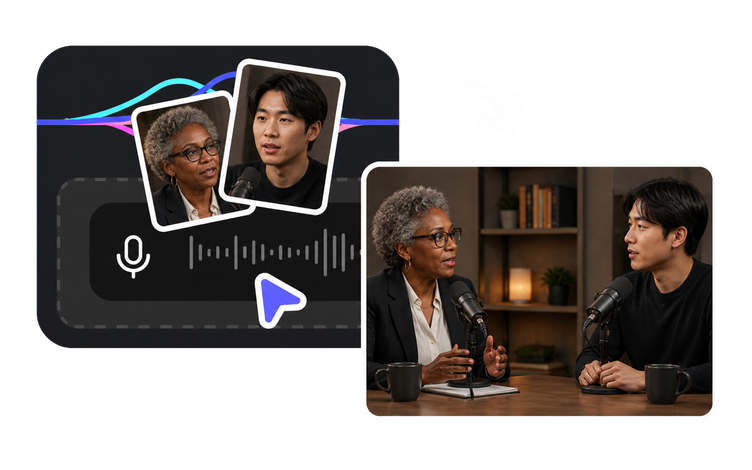
For production teams running an interview or podcast show on a season schedule—not a one-off episode. Build episodes around a steady pair of hosts, rescue audio a remote guest recorded on a laptop mic, and turn one long conversation into the segments and language editions the season needs.

AI Character Video for Storytelling

AI Character Video for Storytelling

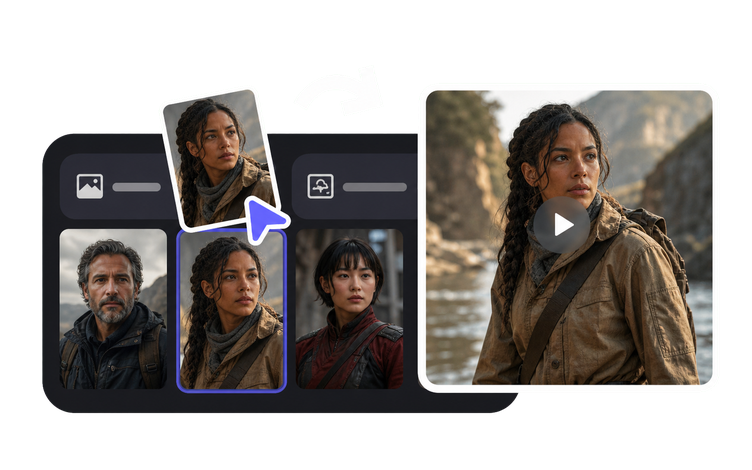
For teams making character-driven series, animated narratives, and brand IP content. Lock a character’s face, voice, and look into a reusable profile, build scenes and dialogue shots around it, and keep episode nine recognizably the same character as episode one. VisionStory returns the assets; the release decision stays yours.

Previsualization and Concept Videos

Previsualization and Concept Videos

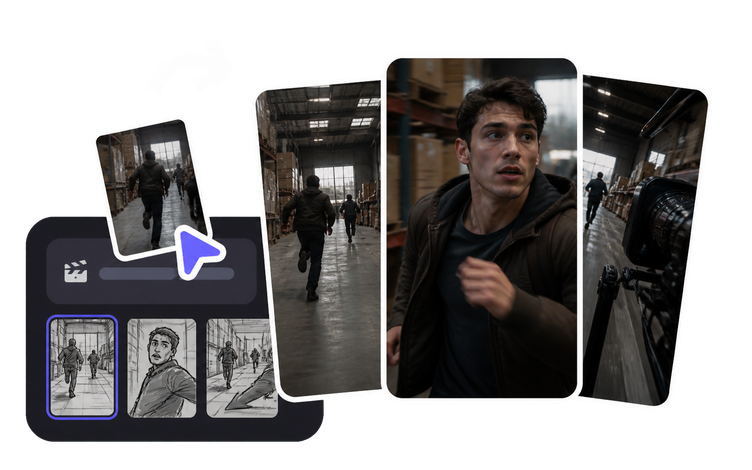
For previs artists, directing teams, and development producers deciding what’s worth shooting. Build a moving version of a sequence from the script, the boards, and your own reference art, compare two or three ways to stage it, and put something on screen for financiers before a single build order goes out.

Multi-Speaker Dubbing for Programs

Multi-Speaker Dubbing for Programs

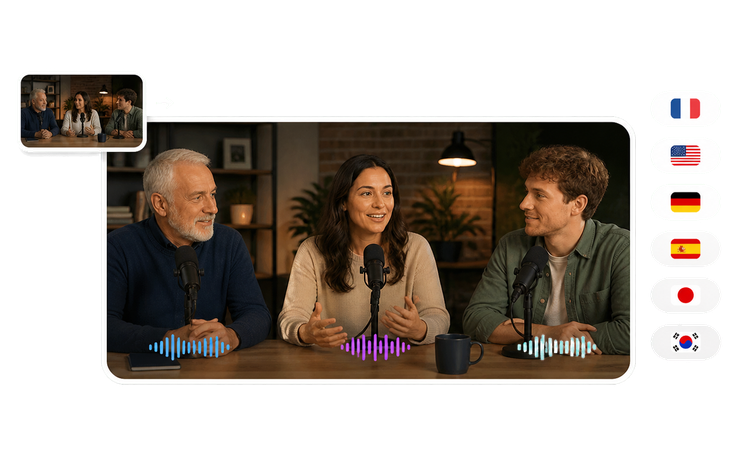
For programming, distribution, and versioning teams that own the library rather than sell localization project by project. Take a locked episode with three people talking over each other, give each speaker their own voice in every market, and keep Episode 4 sounding like Episode 1 across a whole season.

Frequently asked questions

  • Sort by what it is, then by where the visuals come from. If the format is two people talking and the value is in the conversation, you’re in interview and podcast production. If a recurring character carries the story and has to look the same in episode nine as in episode one, you’re in character video. If nothing has been shot yet and the job is to show a producer or commissioner what a sequence could look like, you’re in previsualization. If the show is finished, locked, and only needs to reach another territory, you’re in dubbing. Two more questions break the tie: does the work move per episode or per season, and who has to say yes before it leaves the building. A concept preview answers to whoever greenlights it; a dubbed edition answers to whoever released the master.