Video gets recommended to outbound teams as the way to stand out, and then quietly abandoned somewhere around the fifteenth recording. The idea is almost never the problem. The production model behind it is: one rep, one camera, one take at a time, meeting a list of three hundred names that is rebuilt every week. Change that step, and what limits the campaign is the quality of the list and the writing—not how much of the file a rep can get through before it changes underneath them.
The list you exported on Monday isn’t the list on Thursday
Pull 40 accounts out of the CRM on Monday and the export starts going stale the moment it lands. By Thursday, the contact at 2 of them has changed jobs, 1 account has been reassigned to another rep, another has closed a round and no longer belongs in the segment the message was written for, and a colleague has already emailed 4 of the names. Working through that file one recording at a time means the last videos in the batch are addressed to a version of the account that’s since been overwritten.
What matters is that the batch and the export still match. One approved wrapper, one selected likeness, and one authorized voice produce every version in a single pass—so the whole batch reflects a single read of the list instead of 4 different days of it, and a name that drops off on Wednesday is simply removed before the send. Deciding which accounts belong on the list, checking ownership and prior contact before anything is generated, and keeping the list inside your own systems all stay with your team.
Swapping in a name isn’t personalization
Anyone who’s been on a prospecting list for a year knows the trick. The opener says the company name, maybe the city, maybe a job title—and then it slides into the same paragraph everyone else got. On video it’s even more obvious, because the tone doesn’t change when the variable does. The recipient stops watching around second 6, and the effort spent producing 300 versions bought nothing at all.
What’s worth varying is the reason you’re reaching out to this account and not the one next to it: the hiring pattern you noticed, the stack they published, the launch their own blog announced last week. Write the script so one section is authored per segment or per account and the rest stays fixed, then generate a version for each. The wrapper is reusable. The 30 seconds that earn a reply aren’t—and no generator can do that research for you.
The video still has to survive the inbox
Most prospecting videos get judged before anyone hears a word: an attachment nobody opens, a player that won’t run inside the email client, a thumbnail that’s a black frame with a play triangle stamped on it, an opening second where the rep is still finding the camera. Whatever gets said in the next 30 seconds never even gets a chance to be evaluated.
So treat the frame as part of the message. Pick the still your team will use as the thumbnail, make sure the first second is already speaking instead of settling in, and put the file on a page where it plays next to the offer rather than asking for a download. HD and 2K output keeps it sharp when a landing page scales it up. Where the file is hosted, and how it’s linked from the email or message, stays your team’s decision.
Be the person the prospect looks up
The reply that never comes has a predictable pattern. The prospect watches 4 seconds, doesn’t recognize the face, opens the sender’s profile in another tab, and finds a different person—or nobody at all. A polished presenter who doesn’t work at your company reads like an ad, and an ad in a cold inbox gets treated like every other ad.
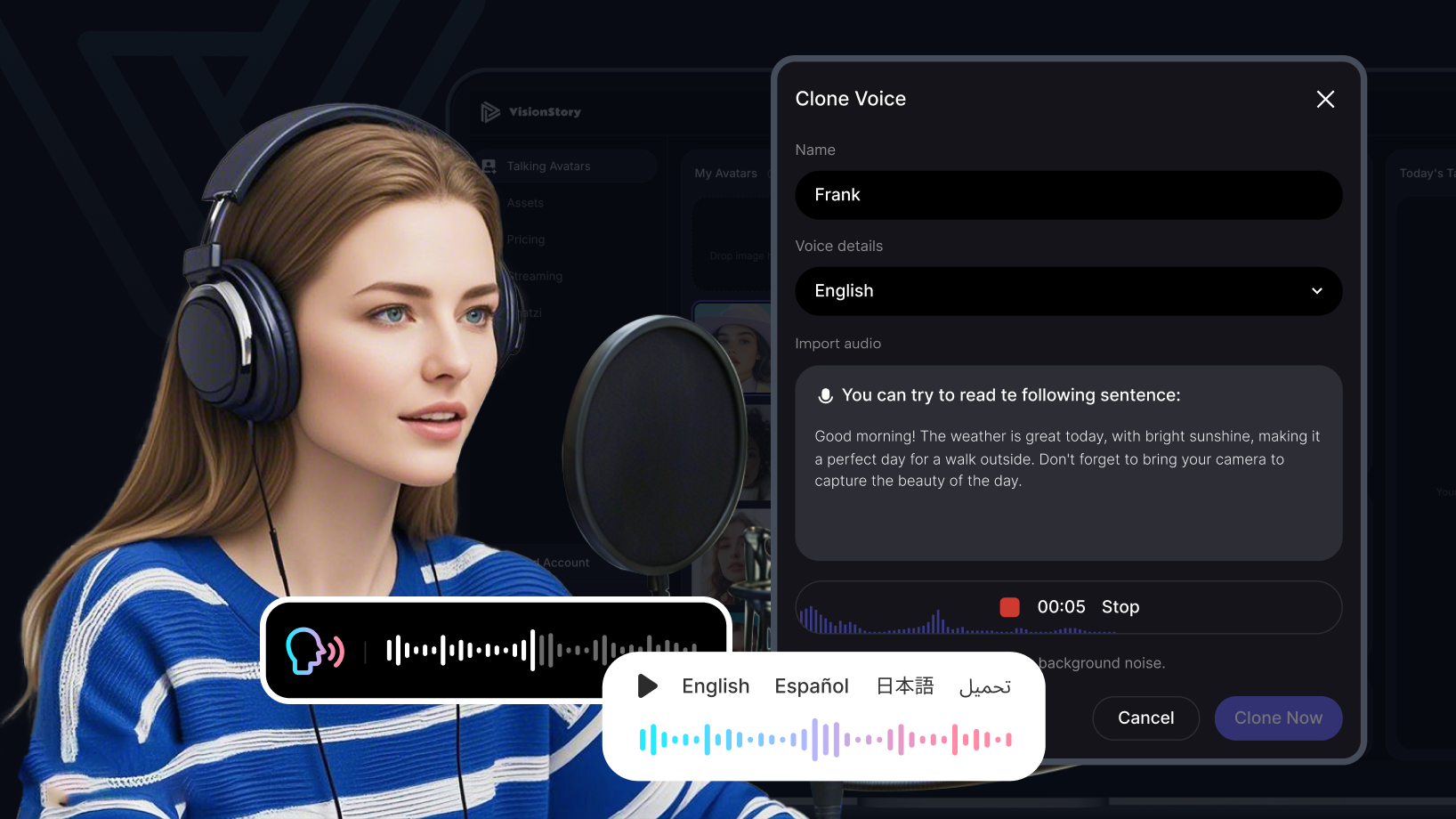
So the presenter has to be whoever the signature says it is. Build the avatar from that rep, and the voice from a recording they made and authorized in writing—so the face in the video and the face on the profile a prospect opens in the next tab are the same person, and it holds up to the 10 seconds of checking they’re going to do. When the account is worth a live call later, whoever joins that call is clearly the person who sent the video.
Send while the trigger is still true
Outbound has a shelf life. A funding round is news for about a week. A new department head is worth writing to in their first month, not their third. The conference is next week only once. A recording session booked for Thursday means the reason for reaching out has aged past the point where it explains anything—and the message lands as a generic pitch with a stale detail stuck inside it.
Taking the studio step out of the loop is what keeps the timing intact. A rep writes the trigger paragraph in the morning, generates the versions that need it, and has the files ready the same day—because nothing is waiting on a room, a camera, or a colleague’s calendar. The call on whether that trigger is genuinely relevant, and whether the account should be contacted at all, is still made by a person before anything is generated.




Users Love VisionStory
Discover why content creators and marketers trust VisionStory for their AI video needs. From powerful features to an effortless user experience, our community can’t stop raving about the results they achieve with VisionStory.