What a performance team learns in a week is capped by two things: how many genuinely different ideas reach the auction, and how fast a tired one can be replaced. Everything here is about raising that ceiling, and about the five places where the creative half of testing usually jams inside an in-house team.
Test the argument, not the color grade
The brief asked for five variants and five arrived on Friday. Watching them back, the difference is a headline font, two background colors, a different track and the same actor saying the same sentence in the same order. The test runs for a week and the results come back in a cluster tight enough that nobody can call a winner, so the account learned nothing except that the audience is indifferent to teal.
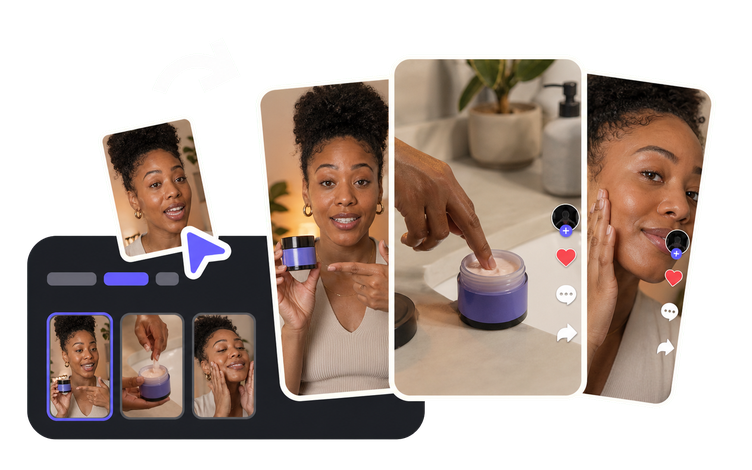
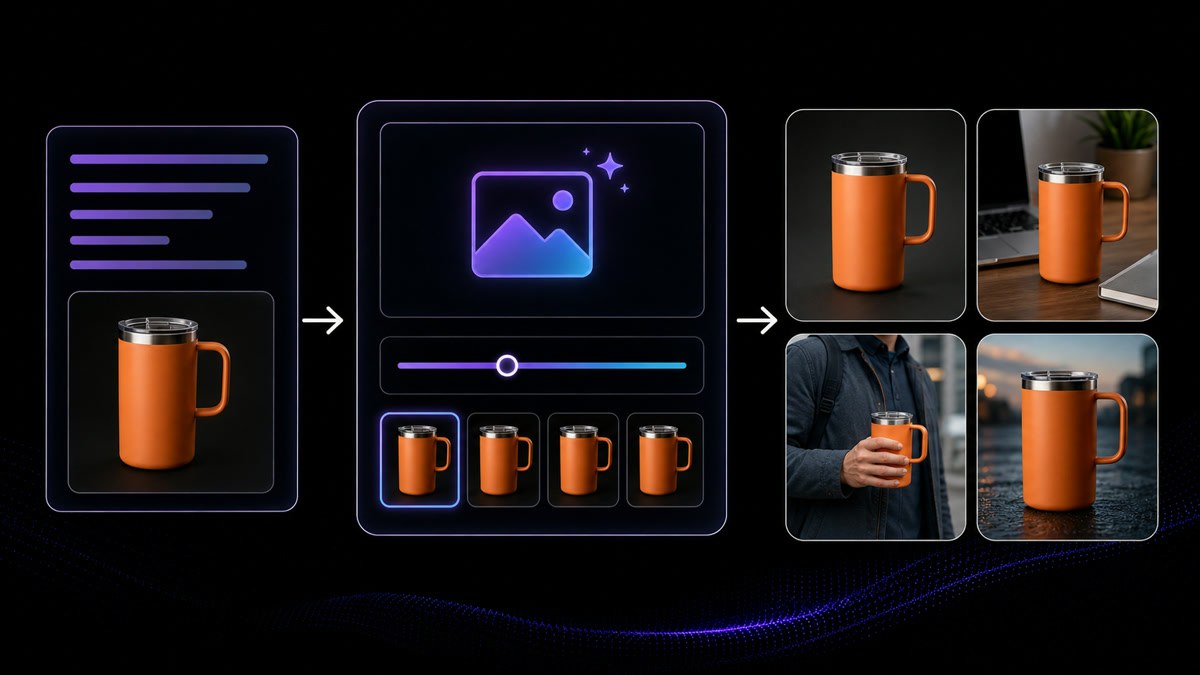
A variant is only worth an impression if it changes something the buyer can act on: which pain it opens with, which promise it makes, which kind of proof it offers, who appears to be talking. Feeding one approved set of product facts into the generation workflow returns several concepts that argue differently rather than one film in new packaging, and the creator-style route puts the same claim in an entirely different register. You still decide what the variable is; the workflow only makes producing it cheap enough to be honest about.
Win the first three seconds or lose the rest
The thumb moves before the logo animation finishes. In the report the video shows a respectable average watch time, which is generated almost entirely by the small share of people who got past second two; everyone else left during a slow establishing shot and a brand bumper nobody asked for. The team keeps refining the second half of a video that most of the audience has never reached, and the cost per acquisition does not move.
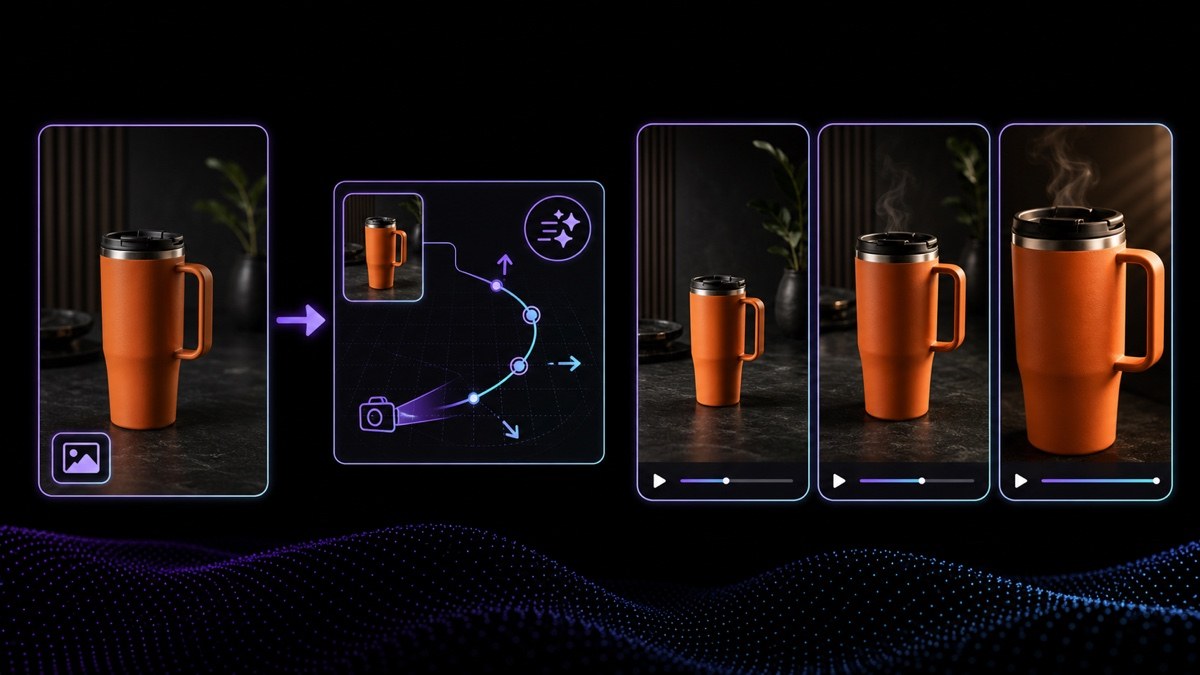
Treating the opening as its own test object changes what you produce. One concept, several openings: the objection stated out loud, the result shown before it is explained, a creator holding the product mid-sentence, a generated shot that simply looks unfamiliar in a feed of stock footage. Each is a separate file, so your buyer can run them against the same body and see which hook carries. Because the cost of another opening is a generation rather than a reshoot, cutting the first two seconds stops being an argument.
Have the next batch ready before the current one tires
The winning video carried the account for a good stretch. Then frequency climbs, CPM starts drifting upward, and the same spend buys fewer clicks each morning. Everyone can see it happening on the dashboard. What nobody has is a replacement: the shoot that produced this asset happened months ago, the next one is not scheduled, and the only thing left in the folder is the variant that already lost.
Fatigue is a supply problem before it is a creative problem. When a concept can be rebuilt from the same approved facts without booking a crew, the response to a rising CPM is to release the batch that was already queued rather than to negotiate a shoot date. Keep two or three untested concepts standing behind whatever is live, refresh the hook on the tired winner instead of retiring the whole idea, and let the losers go early. VisionStory hands back the files; the pacing, the budget and the kill decision stay with your buyer.
Clear the platform rules before the batch goes live
Twelve files are ready on a Thursday and the campaign is meant to start Friday. One promises a result on a timeline nobody has substantiated, one shows a before-and-after, two carry an offer whose end date has already passed, and three have burned-in captions that sit under the safe area on Reels. Rejections come back one at a time over the weekend, the launch slips, and the buyer spends Monday resubmitting instead of reading results.
The fix is a review pass on the batch, not on each file as it is rejected. Because every concept is generated from one approved set of product facts, claims and offer terms move together: correct them at the source and the whole batch inherits the correction. Your marketing and legal reviewers then check promises, comparisons, disclosures and caption placement against current platform advertising policy, with the files still sitting in your own folder rather than in a rejection queue.
Read the test so it can actually name a winner
Two variants come back with different numbers and the room disagrees about why. One of them changed the hook, the claim and the speaker at once, so a win tells you only that something in that bundle worked. Another was paired with a different audience, which means the creative may not be what moved cost per acquisition at all, and the debate goes around the table twice before someone books the next shoot anyway.
Attribution is a briefing decision before it is a reporting one. Decide what each concept holds constant, change one variable per file, and keep the body identical when the opening is the thing under test, so a gap in the numbers points at something you can reproduce. Let the buyer call the read on the ad platform's own data, and treat a result from a thin, still-moving sample as a hypothesis for the next batch rather than a verdict. Because another file costs a generation rather than a reshoot, rerunning an inconclusive test is a cheaper answer than arguing about what it meant.



Users Love VisionStory
Discover why content creators and marketers trust VisionStory for their AI video needs. From powerful features to an effortless user experience, our community can’t stop raving about the results they achieve with VisionStory.