If you run a show, the gap between 'we should do video' and actually publishing video episodes is usually money and logistics, not ideas. Here is what changes when the show runs through this workflow, and which production costs it quietly removes.
Pilot a show format before you build a studio
Most podcast formats fail in ways you can only see, not plan around: two hosts talking over each other, a question segment that runs twice as long as it should, visuals that stop changing after the first minute. The usual way to discover this is expensive: book a studio, record three episodes, and find the problem in the edit.
A pilot episode flips that order. Generate one complete episode from your topic or script, watch how the host roles, pacing and structure actually hold up on screen, and fix the show itself before a single piece of equipment is bought. By the time the format earns a studio, you know exactly what you are building.
Turn an audio-only podcast into video for YouTube
Your back catalog is full of episodes that only exist where audio lives, in podcast apps, while the biggest discovery surface for shows, YouTube, never sees them. Re-recording old conversations on camera is not a real option, and static waveform videos convince nobody.
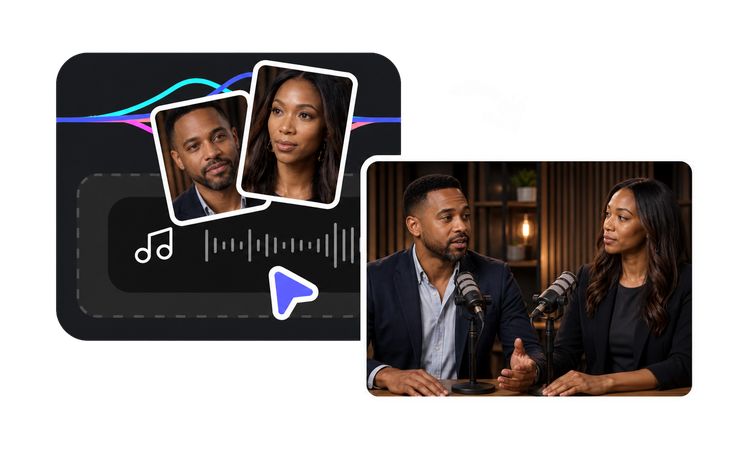
This workflow takes the recording you already have and rebuilds it as a two-speaker video: speaker switching, captions and host visuals over the original dialogue. Every episode becomes a landscape full episode for YouTube plus captioned cutdowns for social feeds, so the work you have already done starts reaching people who would never open a podcast app.
Build a show system you can reuse every week
The exhausting part of a weekly show is rarely the conversation. It is everything around it: cover art gets redesigned, layouts drift, a guest episode suddenly looks different from last week's, and every small visual decision comes back every single week.
Lock the system once instead. Cover art, host likenesses, voice roles and on-screen layout become fixed assets, and only the topic material changes per episode. The design work disappears from the weekly loop, and a first-time viewer can tell who is asking and who is answering within seconds.
Give listeners the show in their own language
Most shows never localize, because the honest options are bad: re-recording an episode in a second language is unrealistic, and auto-captions on the original audio feel like an afterthought to the audience receiving them.
Dubbing a reviewed episode changes the economics. Any of 88 languages, with who speaks when, the conversational pacing and the on-screen structure all preserved, so each market gets the complete show with the same host dynamic. You review the master once, then let approved editions carry it to audiences you could never record for.
Salvage interviews recorded in imperfect rooms
Great guests rarely come with great audio. Remote calls, echoey home offices and laptop microphones have ended more interview episodes than bad questions ever did: the conversation is good, but the recording feels unusable.
Cleaning noise out of the source track first changes what counts as publishable. Once the dialogue is clear, it moves through speaker assignment, captions and visualization like any studio recording, and an episode you would have shelved becomes part of the catalog.


Users Love VisionStory
Discover why content creators and marketers trust VisionStory for their AI video needs. From powerful features to an effortless user experience, our community can’t stop raving about the results they achieve with VisionStory.