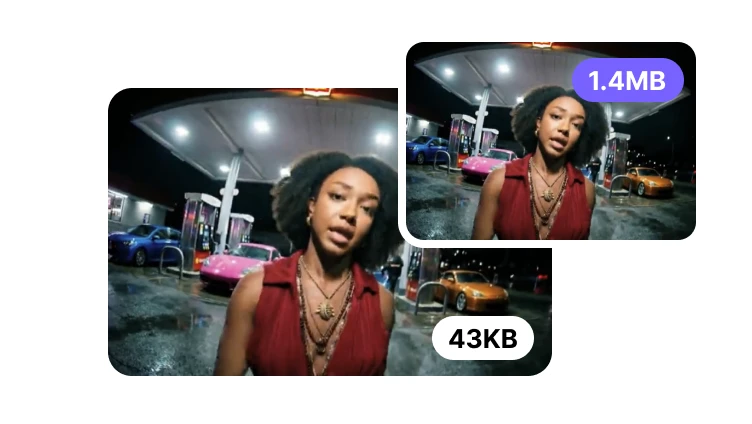
Reduce an Image to Your Target File Size
Prepare images for a form, marketplace, application, or attachment with a maximum file-size rule.
Drop an image here
JPG, PNG or WebP · up to 1 file · 10 MB each
Prepare images for a form, marketplace, application, or attachment with a maximum file-size rule.
JPG, PNG or WebP · up to 1 file · 10 MB each
Target file size
Set a practical KB or MB ceiling for forms, marketplaces, attachments, and account uploads.
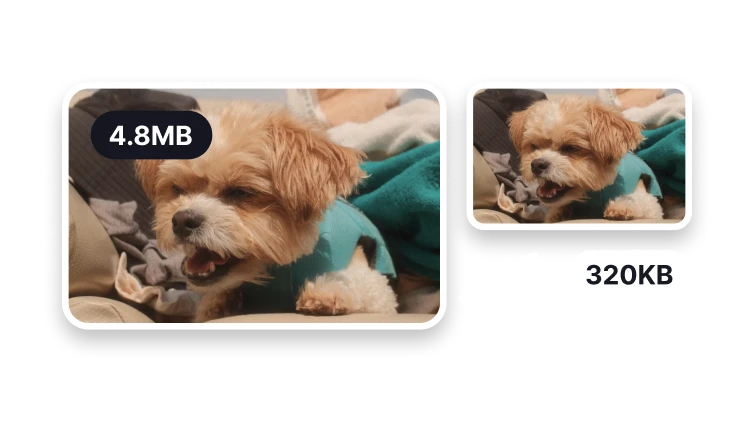
Prepare a compact image for portals with a low file limit.
Balance readable detail with a common upload ceiling.
Keep more visual detail for listings and content systems.
Confirm the final bytes before submitting the image.
A target is successful only when the downloaded file meets the destination rule.
Byte-limit planning
Use this route when a form, application, marketplace, or attachment rejects files above a stated size. Pixel dimensions alone do not answer that requirement.
Note the unit and ceiling, then leave room for systems that may display or calculate bytes differently.
Choose Image Resizer when width and height are mandatory and file bytes are only a secondary concern.
Keep requested versus achieved bytes as the page's central decision, and route neighboring compression, conversion, timing, or editing needs to their dedicated tools.
Target evidence
Record requested bytes, actual output bytes, dimensions, format, selected settings, and visible review notes.
Publish source provenance, product version, test date, and any retry rather than converting one successful file into a universal claim.
Record unsupported cases and failed checks alongside successful fixtures so requested versus achieved bytes remains reproducible rather than becoming a universal marketing claim.
Target diagnosis
Decide whether lower resolution, a different quality level, or a deliberate format change is acceptable for the destination.
Upload systems may state both byte and dimension limits; satisfying one does not prove the other is satisfied.
When requested versus achieved bytes cannot be confirmed, retain the best source, state the limitation, and choose a workflow with an explicit product contract.
The processing tool can work toward a 100 KB ceiling, but the achievable result depends on format, dimensions, and image detail. Always check the reported output size.