Voice Cloning
Build an authorized AI voice identity once, then reuse it for scripts, avatars, training videos, localization, and branded narration.
Try it now
Build an authorized AI voice identity once, then reuse it for scripts, avatars, training videos, localization, and branded narration.
Try it now
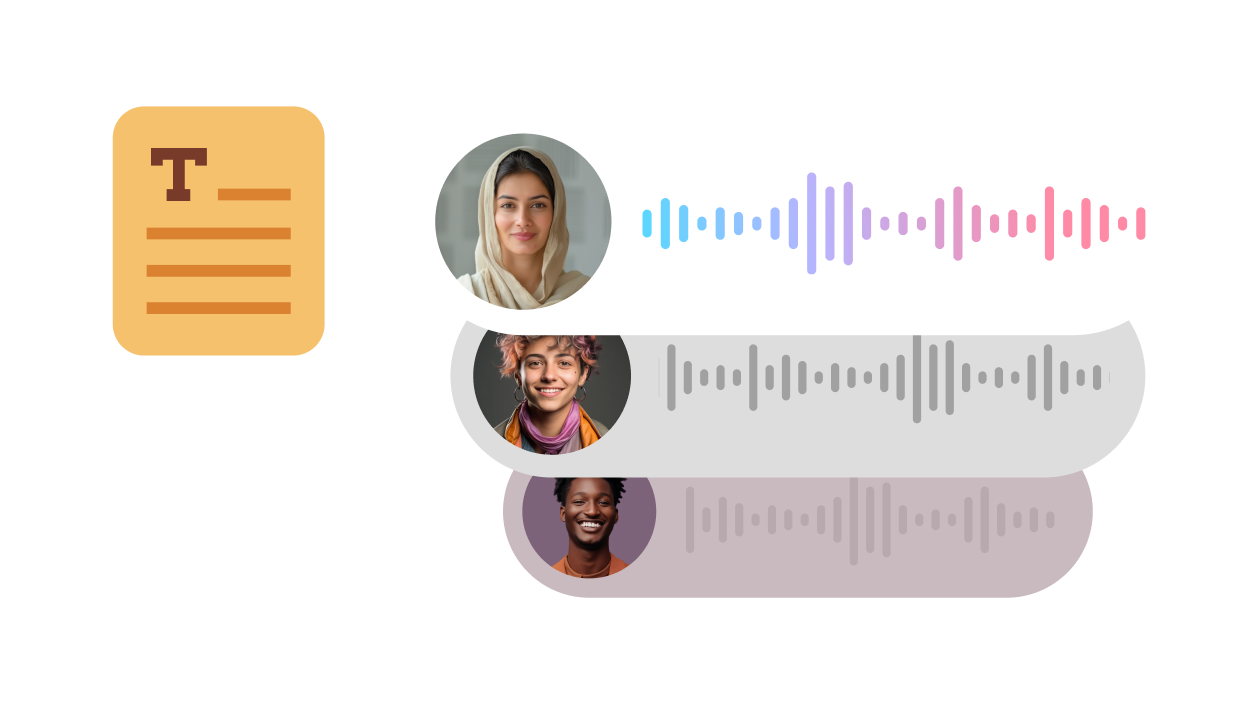
Compare source recordings with generated speech to hear how tone, pacing, and speaker identity carry into new scripts.
A short reference recording used to capture tone and pacing.
The same voice identity applied to generated speech.
A second reference with a different cadence.
Generated output that keeps the speaker identity consistent.
Responsible cloning
Clone only voices you are authorized to use, then keep the output aligned with the agreed purpose and audience.
Clone your own voice, a contracted speaker, or a brand voice you have permission to use.
Do not clone public figures or private individuals without clear consent.
Use the cloned voice for agreed contexts such as training, ads, explainers, or localization.
Clone workflow
Voice cloning is a reusable asset workflow: capture clean samples, create the identity, apply it to scripts, then review before publishing.
Record clear speech with limited background noise and natural pacing.
Create a model that captures tone, accent, and cadence.
Use the cloned voice for avatar videos, training modules, and branded narration.
Check pronunciation, tone, and consent requirements before release.
A cloned voice helps recurring content sound consistent even when scripts, languages, and video formats change.
Founder-led videos
Scale founder updates without recording every script live.

Localized training
Keep a recognizable voice while adapting content for new regions.
Avatar campaigns
Pair a consistent voice with AI presenters for repeat campaigns.
Voice cloning creates an AI voice that can speak new scripts while preserving the tone and identity of a reference voice.