Most onboarding programs do not fail on content. The handbook exists, the deck exists, the checklist exists. They fail on delivery: one long orientation session nobody can rewind, a manager explaining the expense policy for the ninth time this quarter, and a tool walkthrough that went out of date two releases ago. The five results below describe what changes when onboarding is produced as a set of short videos instead of a calendar event.
Know exactly which onboarding videos to build
The request usually arrives as one line in a planning doc: record an onboarding video. What gets recorded is a single forty-minute orientation, filmed once in a conference room, opening with a picture of the org chart. New hires stop somewhere in the middle. Nobody can find the part about expense claims, and by the second quarter the tool demo buried inside it is already wrong.
A set answers the question the single recording never could. A short welcome message from the hiring manager; a company story that explains how the business actually makes money; a role walkthrough of what the first month involves; a systems and IT setup clip per tool; policy basics split one topic per video; a first-week checklist; brief team and manager introductions; and a 30/60/90 check-in that arrives when it is due. Each runs two to five minutes, answers one question, and comes out of material HR already owns.
Stop explaining the same first week over and over
Ask any HR generalist what their week looks like in a hiring month and the answer is a loop: how to request laptop access, where the expense form lives, which channel to ask about payroll, what happens on the first Friday. Managers run the same loop one level down. The information is written down somewhere, but a handbook is not what people reach for in week one, so they ask a person instead.
Turning each of those questions into its own short module moves the answer to where the new hire already is. The systems clip shows the actual login path; the policy module covers one rule and stops; the first-week checklist says what Friday looks like. HR keeps the conversation that genuinely needs a human, role expectations, team relationships, the awkward questions, and hands the repeatable part to a link the new hire can open at midnight.
Keep one familiar guide across the whole series
Onboarding content accumulates from whoever had time. The welcome clip is a phone recording, the systems walkthrough is a screen capture with a different narrator, and the benefits explainer was made two reorganizations ago by someone who has since left. For a new hire, every module feels like it came from a different company, and the modules with no obvious narrator simply never get made at all.
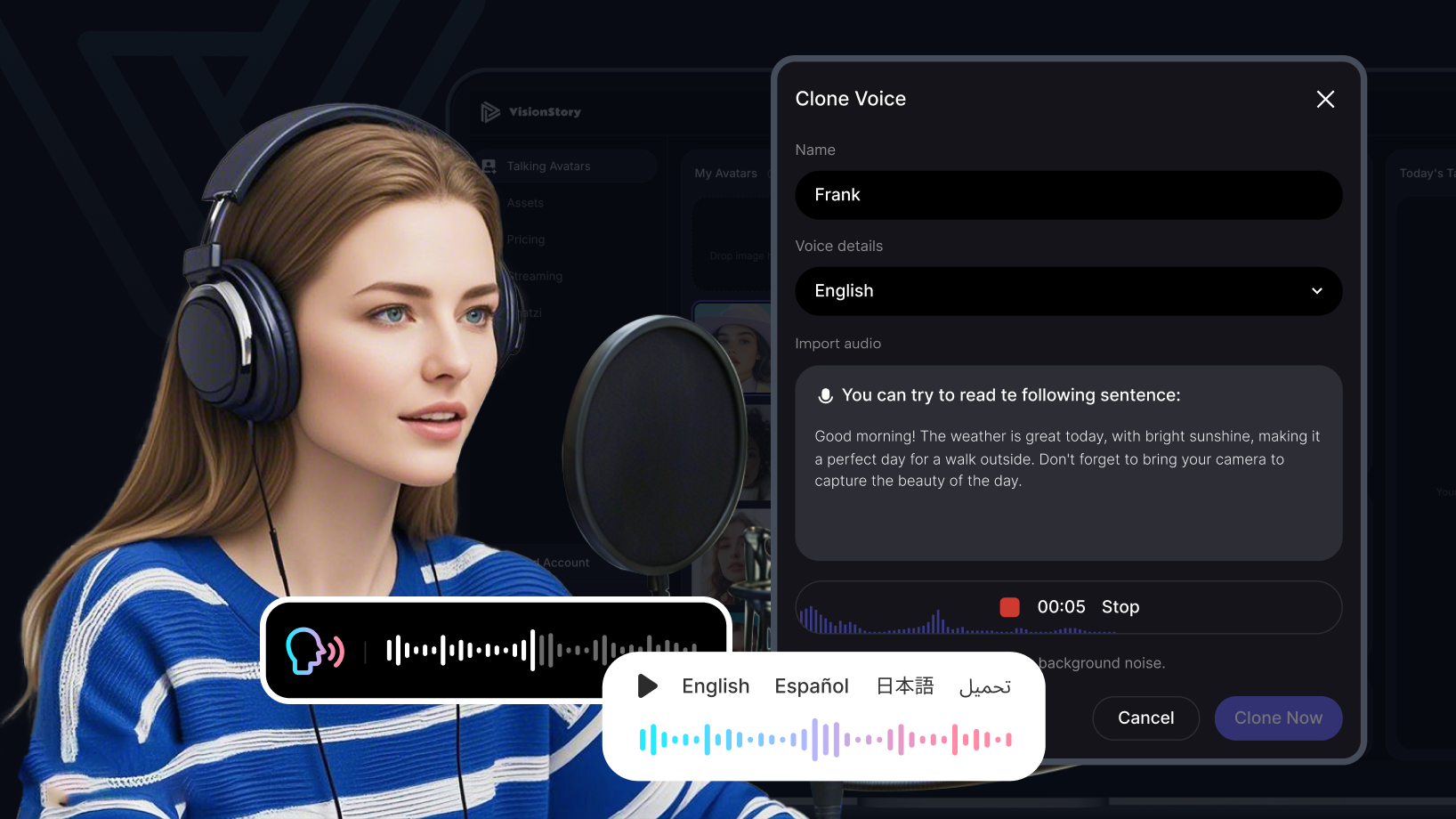
One approved presenter and one authorized voice run through the whole series instead. The same guide opens the welcome message, walks through the role, explains the tool setup and returns at the 30-day check-in, so a module added next quarter still looks like it belongs to the set. When a leader's voice is genuinely the right one for the welcome, it can be used with written permission and reviewed line by line before anything ships.
Fill the weeks between the offer and day one
An offer is signed a month before the start date, and the weeks in between stay silent apart from one email confirming when to show up. The hire arrives on Monday to a laptop IT has not finished provisioning, a badge that is not ready yet, and a ten o'clock team meeting full of project codenames and internal acronyms that nobody stops to explain. The first morning goes on logistics.
Because each module is a file rather than a scheduled session, part of the set can travel with the offer paperwork: who the hire will meet, how the business works, what to bring, and which accounts IT creates versus which ones they request themselves. If the setup steps change, only that module is regenerated. The first morning stops being a download of facts and starts with introductions and real work.
Onboard one person as well as a full group
Live orientation is built around a room. When six or eight people start at once, the session runs properly: an executive drops in, someone walks the benefits portal, questions get answered on the spot. When one person starts in an off-cycle week, HR looks at the calendar, decides a full session for one is not defensible, and sends a folder of links instead. That hire's first week is the abridged version.
A produced set removes the arithmetic. The same modules run for eight people starting the same week and for the one person who joins six weeks after them, at whatever hour they open them, with no session to schedule and no attendance minimum to justify. Off-cycle starts stop being a scheduling problem, and a manager can bring someone in mid-quarter without asking HR to run a program for one. Dubbed editions of the approved modules follow the same rule.





Users Love VisionStory
Discover why content creators and marketers trust VisionStory for their AI video needs. From powerful features to an effortless user experience, our community can’t stop raving about the results they achieve with VisionStory.