Most teams reach this page after one specific failure: a season went out in a new market and something about the audio was wrong in a way the spreadsheet never captured. On the rights-holder side the library is yours, so the recurring question is how to hold a whole slate together across months of releases rather than how to price a single project for a client.
Give every speaker in the scene their own voice
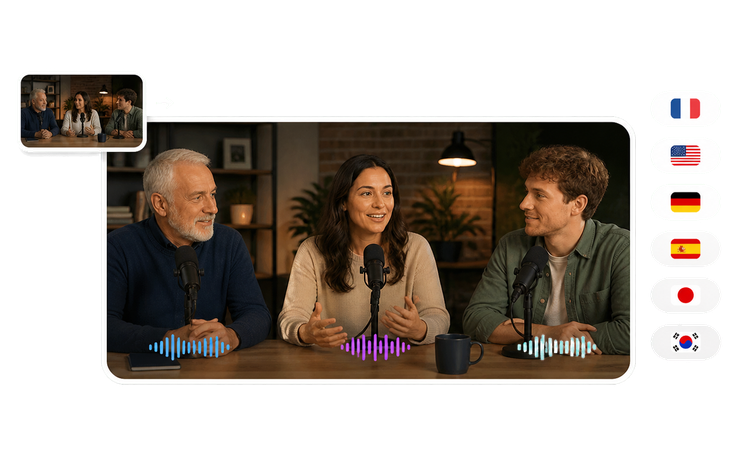
Three people are in the room. The host pushes back, the guest talks over her, the third voice comes in from a monitor half a second later. Run that through a system built for narration and all three come back as one performer doing an impression of a conversation. The words survive. The scene does not, and a viewer in that market hears a version of the show nobody would have signed off on in the original language.
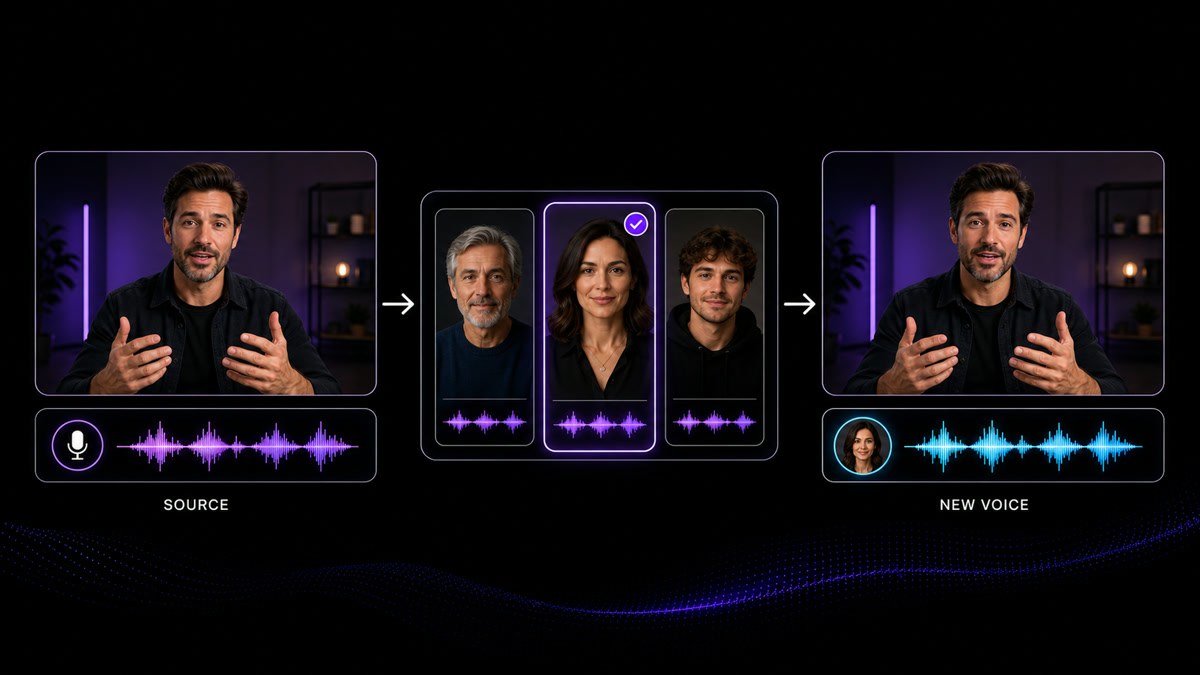
Multi-speaker video dubbing treats the cast as a cast. Each speaker is assigned a distinct voice in each language and keeps it, with lip sync tied to the picture so a reaction still lands on the face that made it. You decide how close each match should sit to the original performer: a warmer read for the host, something plainer for the analyst who only appears in the cold open. VisionStory produces the editions; casting judgement stays with the people who know the show.
Keep episode fourteen sounding like episode one
Nobody complains about episode one. The complaint arrives at episode four, when the German edition comes back and the lead sounds like a different person, because that batch was ordered eight weeks later and whoever handled it made a reasonable choice with no record of the earlier one. Viewers who watch a season in a weekend hear the seam immediately. The team that has to answer for it usually finds out from a support thread rather than from anyone in the pipeline.
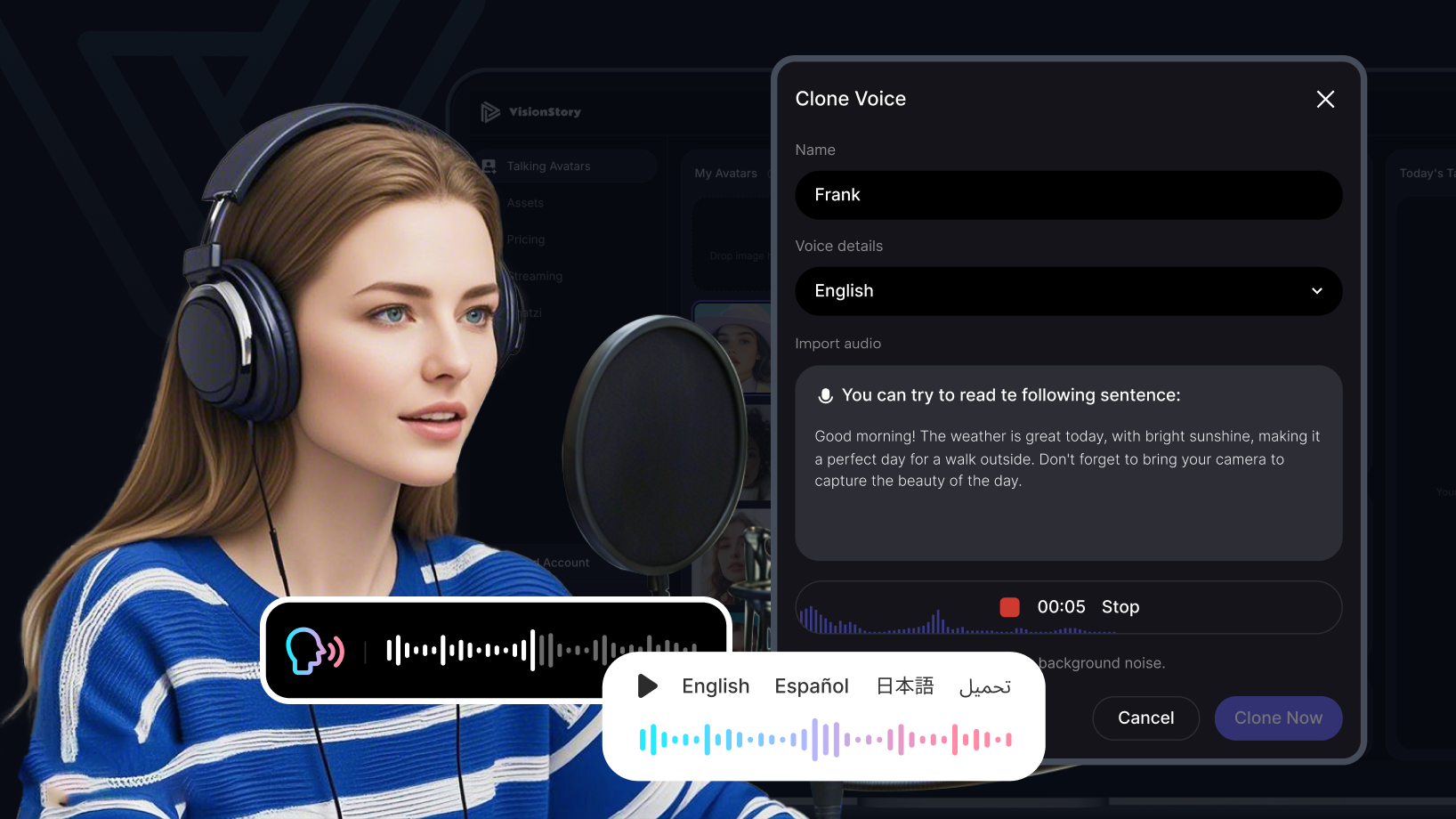
Fixing the voice for each recurring speaker turns that into a decision you make once. A cloned voice built from an authorized recording, or a selection from the 1,000+ voices in the library, becomes the entry for that character in that language and is reused when the next batch of episodes goes through. Keep the mapping of speaker to voice to language somewhere your team can read it, because a season that spans a year of releases will outlive whoever set it up.
Move a back catalogue that stalled on cost
There are several hundred hours sitting on a shelf: finished shows, cleared music, rights that still run for years. They are not in the new market for one reason, which is that the quote to voice them came back higher than anyone could justify against a title that already earned out. So the library stays where it is, and every renewal conversation about that region starts from the same short list of titles.
When dubbing runs in-house from the locked masters you already hold, the arithmetic changes and older titles become worth versioning again. Start with the episodes that have the clearest audio and the fewest overlapping speakers, since those come back needing the least review, then work outward. Two things still gate it and neither is technical: your underlying rights have to cover dubbed derivatives in that territory, and any performer voice you reproduce needs consent that reaches that far.
Track the version tree before it tracks you
One episode rarely stays one episode. A scene is trimmed for one broadcaster, a brand is obscured for another, a rating card is added in a third territory, and each of those cuts wants its own audio and its own subtitle file. Six months in, a request for the current French version has three plausible answers and the person who knows which is correct is on leave. Nothing here is exotic; it is version count multiplying faster than anyone planned for.
The discipline that holds is dubbing only from a locked cut, and rebuilding rather than patching when the cut changes. Each territory edition is generated from a named source master, so a trim that arrives late means reissuing the affected editions from the new master instead of splicing the old audio onto it. VisionStory hands back files with the source they came from; the naming, the rights window and the record of which edition is live stay in the media management system your distribution team already runs.
Settle the voice rights before you clone anyone
The request sounds harmless in a production meeting: keep the narrator's voice in Spanish, the audience already knows it. Then someone asks what the original contract actually says about a synthetic reproduction, and the answer is usually that it was written before anybody had to think about it. Meanwhile the performer has a view of their own, an agent has another, and a title that has already been promoted for a date is waiting on both.
Treat the consent as part of the deliverable. Voice cloning at VisionStory requires a recording the speaker authorized you to use, and for a program library that authorization should name the territories, the term, the titles it covers and what happens when the licence lapses. Where consent is missing or unclear, cast a library voice instead and keep the show moving. The technical step takes minutes; the paperwork is the part that decides whether an edition can stay in the market.



Users Love VisionStory
Discover why content creators and marketers trust VisionStory for their AI video needs. From powerful features to an effortless user experience, our community can’t stop raving about the results they achieve with VisionStory.