Count the afternoons that person can realistically give you this year. Two, maybe three, and twelve episodes have to grow out of them. That arithmetic is the whole problem, and it is what a reusable spokesperson changes: the recording session stops being the unit of production, the script becomes it, and the approval that used to happen on a set happens in a doc instead.
Stop booking the one person who can say it
The plan was a monthly series, and the plan was reasonable in January. The founder is the only person in the company whose name on a point of view means anything, and the founder has a fundraise, a customer trip and two board meetings between now and September. Three episodes in, the series has become a standing invitation on a calendar that everyone quietly declines, and the fourth script sits in a doc waiting for a shoot date nobody wants to defend.
One authorized session is enough to unblock the rest of the year. A portrait and a short recording that person has agreed in writing to have used this way become the face and the voice for the series, and every episode after that arrives as a script instead of a shoot request. The person still reads and approves what the spokesperson says, which takes minutes rather than an afternoon, and the series stops depending on whether a camera and a calendar can be made to overlap.
Three writers should not sound like three companies
Three people on the marketing team each own a couple of episodes, and each of them is competent. One writes in the clipped, confident register the website uses. One is warmer and hedges more. One inherited a deck from the last agency and still writes like it. Played back to back, the series reads as three companies with a similar logo, and the audience registers that long before anyone in the room can name what is wrong with it.
A fixed presenter removes one whole axis of that drift. The same face, the same voice, the same pacing and the same framing show up in every episode, so the only variable left is the writing, which is the variable you can actually edit. Reviewing a script against a house style is a tractable job; reviewing three different performances by three different people is not. What the audience learns to recognize is a channel rather than a run of unrelated videos.
Settle the permission question before the first episode
Six months in, the marketing leader who fronted the series takes another job. Her face and voice are in fourteen published videos, three of which are still running at the top of a paid funnel. Nobody wrote down what she agreed to, whether it covered ads as well as the blog, whether it ends when her employment does, or who takes the videos down if she asks. A conversation that should have taken twenty minutes at the start now involves legal and a spreadsheet of URLs.
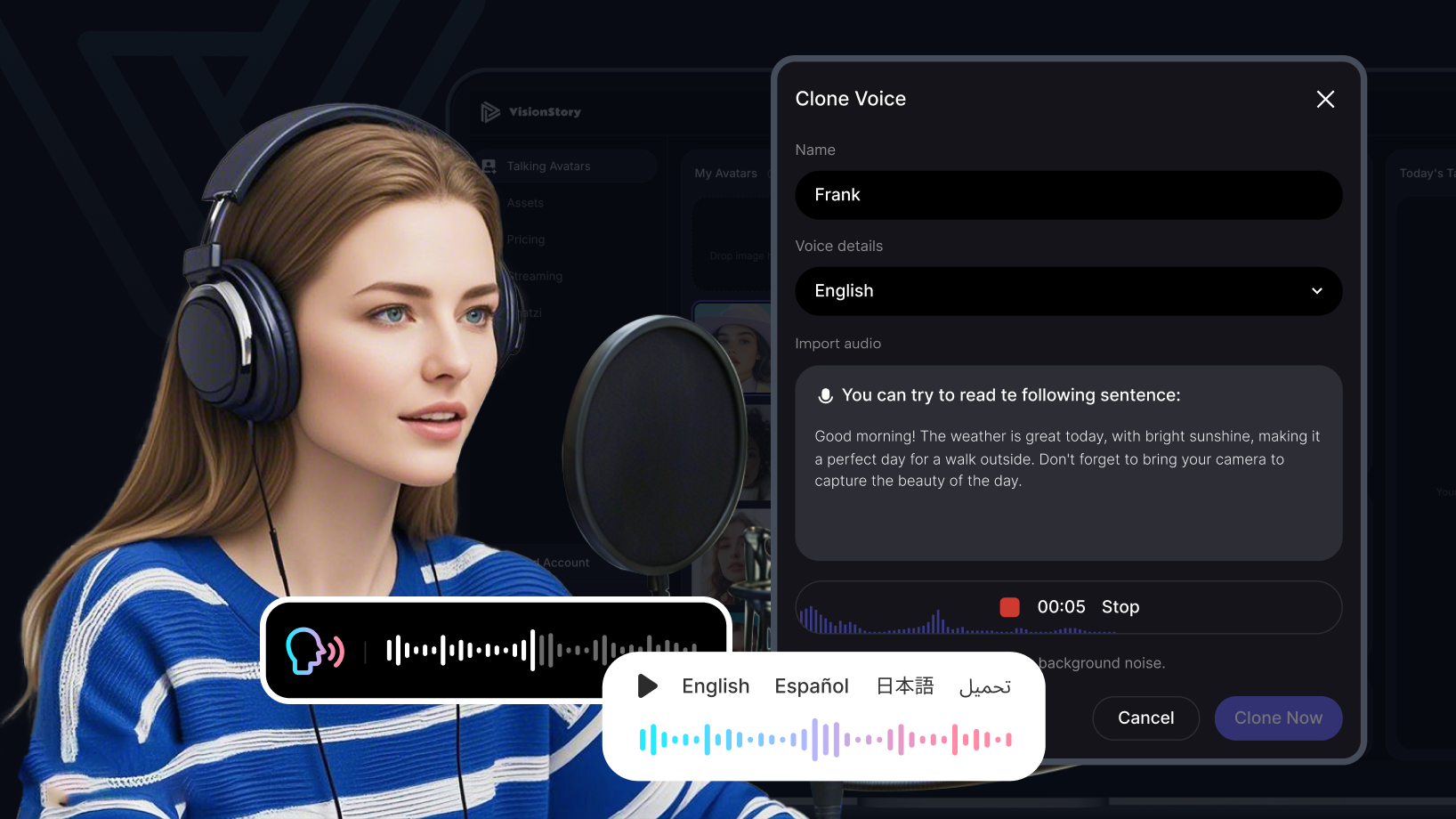
Building a reusable spokesperson forces that conversation to the front, which is the useful part. VisionStory requires that the likeness and the voice recording come from someone who has authorized this use, and the scope worth writing down is narrow and boring: which channels it covers (organic social, paid ads, the sales deck, the help center), which kinds of content, how long the permission runs and whether it survives their employment, and what your team does within what timeframe if that person later asks you to stop. Name someone who holds the signed copy and can find the list of published URLs, because the file you generate outlives the meeting where everyone agreed it was fine.
Fix a wrong line without asking for another afternoon
The video went out on Tuesday. On Thursday someone in legal reads the third paragraph and points out that the claim about being first to market is not one the company can actually support, and that sentence is now sitting in a video already sent to the entire customer list. With a filmed executive, the options are to leave it up with a correction underneath, take the whole thing down, or ask a very senior person for a second afternoon to fix eleven words.
When the presenter is generated from a stored likeness and voice rather than a booking, correcting a line means editing the script and rendering the episode again. The face, the voice and the framing come back identical, so the corrected version does not look visibly like a patch. Approval still runs the way it did the first time, with the brand lead reading the revised wording before anything replaces the original, and the practical effect is that small errors get fixed instead of being lived with.
Know which videos need a person and which do not
Two things end up in the same content calendar and they are not the same job. One is a position: what we think is happening in this market, why we built the product the way we did, what we would tell a buyer who is about to make a common mistake. The other is a product explanation: here is what the feature does. Teams tend to hand both to the same producer, then wonder why the product videos feel oddly self-important and the opinion pieces feel like a demo.
A spokesperson belongs to the first kind. A position needs someone visibly attached to it, because an argument with nobody behind it is just copy read aloud. Product explanations do better as screen recordings, walkthroughs and short demos where the interface is the subject and a presenter is a distraction. Sorting the calendar into those two piles before anything gets produced usually shortens the list of episodes that need the spokesperson at all, and makes the ones left worth the review time.




Users Love VisionStory
Discover why content creators and marketers trust VisionStory for their AI video needs. From powerful features to an effortless user experience, our community can’t stop raving about the results they achieve with VisionStory.